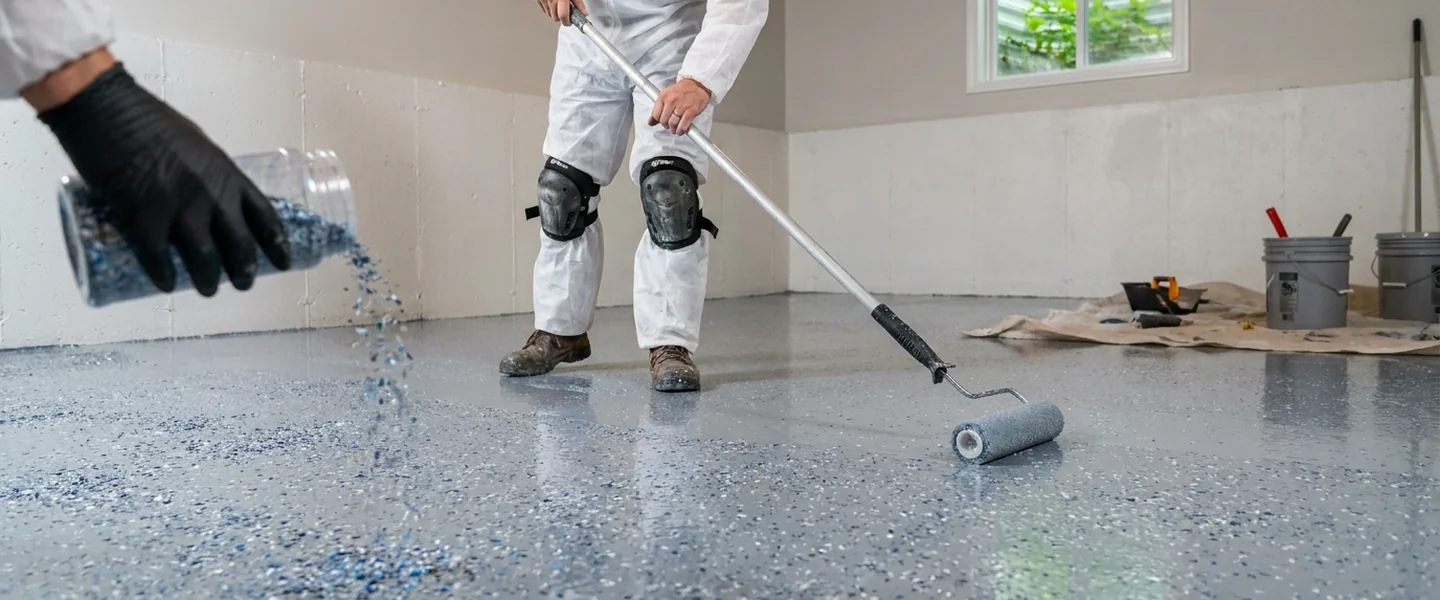
Basement Floor Epoxy Coating in Raleigh, NC
NC basements present unique moisture challenges that above-grade garage coatings simply cannot address. Our below-grade systems include vapor barriers, penetrating moisture primers, and specialized epoxy formulations designed for Triangle-area semi-finished basements.
Call (984) 252-4791 — Free EstimateNorth Carolina Basement Moisture: A Different Problem
Basements in the Triangle area behave differently from garages when it comes to moisture vapor emission. While Raleigh's clay soil creates MVE challenges in both above-grade and below-grade slabs, basement floors face additional hydrostatic pressure — literal water pressure from the surrounding soil pushing against the foundation and floor slab from below and from the sides.
During Raleigh's wet seasons (typically spring and late fall), the water table in clay-heavy Piedmont soil rises significantly. Hydrostatic pressure forces moisture through micro-pores and hairline cracks in basement slabs at rates that are often 3–10 times higher than in garage slabs of the same age and construction. An epoxy system applied without a proper vapor retarder primer in a North Carolina basement will fail — not if, but when.
For the large category of Triangle-area basements that are dry but humid — semi-finished spaces used for storage, recreation, or home offices — epoxy is an excellent finish choice when properly installed with below-grade-appropriate materials and methods.
Triangle-Area Basement Types We Coat
Semi-finished basements are common in the Triangle area, particularly in neighborhoods built in the 1990s and 2000s in Cary, North Raleigh, and Wake Forest. These spaces often have concrete block or poured-concrete walls with an unfinished slab floor that the homeowner is converting into usable living space. Epoxy coating transforms an unfinished, dusty concrete floor into a cleanable, professional-looking surface that supports a functional living area.
Common Raleigh Basement Applications
- Home Office Conversion — Semi-finished basements converted to work-from-home offices by Triangle's tech workforce. Epoxy creates a clean, professional surface that complements drywall and lighting upgrades.
- Home Gym — Raleigh's fitness-conscious homeowners are converting basements to private gyms. Epoxy floors handle weight equipment, rubber mats, and the cleaning demands of a gym environment.
- Recreation Room — Finished basements used for gaming, media, and family recreation benefit from a durable, easy-clean floor that looks attractive under area rugs or on its own.
- Workshop / Hobby Space — Below-grade workshops need a chemical-resistant, tool-drop-resistant floor that contains sawdust, paint, and lubricants without staining.
- Clean Storage — Epoxy eliminates the dusty, spalling concrete surface that contaminates stored items and creates a sanitary storage environment.
Below-Grade Epoxy System Components
Our basement epoxy system uses modified material specifications compared to our standard garage system to account for below-grade moisture conditions.
Step 1: Below-Grade Moisture Assessment
We assess not just surface MVE but also evaluate for signs of hydrostatic pressure, wall and floor joint condition, and previous water intrusion history. This assessment determines whether epoxy is appropriate and which primer system is required.
Step 2: Diamond Grinding
The same CSP 2–3 diamond grinding process used in our garage systems. Existing paint, sealers, or previous failed coatings are fully removed before grinding.
Step 3: Penetrating Moisture-Mitigation Primer
We use a two-component penetrating epoxy primer formulated specifically for below-grade concrete. This primer penetrates into the concrete pore structure and creates a vapor retarder that can handle higher MVE levels than standard epoxy primers. For basements with elevated readings, a thicker application of primer is used to build the vapor barrier film.
Step 4: 100% Solids Epoxy Base Coat
Applied at 10–12 mils DFT with vinyl chip broadcast or solid color depending on the homeowner's preference. Solid-color epoxy is popular in basement home gym and office applications.
Step 5: UV-Stable Topcoat
Because basement spaces are below grade, UV is typically not a major concern unless there are significant window wells. We use a low-odor, fast-cure polyaspartic topcoat that performs well in enclosed spaces and cures without requiring extended ventilation periods.
Transform Your Raleigh Basement Floor
Free on-site moisture assessment and estimate. We'll give you an honest evaluation of your basement's coating readiness.
Call (984) 252-4791 — Free EstimateFrequently Asked Questions
My basement gets damp after heavy rain — can I still get epoxy?
It depends on the degree of dampness. Surface condensation from humidity is manageable with the right primer system. Actual water appearing on the floor surface or coming through wall-floor joints indicates hydrostatic pressure that should be addressed by a waterproofing contractor before coating. We'll give you a straightforward assessment at your free estimate — we won't apply epoxy over conditions that will cause premature failure.
Can you coat a basement floor with existing paint or sealer?
Yes — but the existing coating must be removed first. We use diamond grinding and chemical strippers as needed to bring the surface back to bare concrete before testing and priming. Applying epoxy over existing paint or sealer is a primary cause of adhesion failure and is never part of our process.
Will epoxy make my basement smell?
Modern 100% solids epoxy systems have very low VOC levels compared to older solvent-based formulations. During application, we recommend ventilating the basement if possible. Cure odor dissipates within 24–48 hours. Our polyaspartic topcoats are formulated for use in enclosed spaces and have lower odor profiles than traditional polyurethane topcoats.
How does basement epoxy differ from garage epoxy?
The core system is similar, but the moisture-mitigation primer is formulated for higher MVE levels and potential hydrostatic pressure conditions found in below-grade concrete. The topcoat choice may also differ — in basements without significant UV exposure, we can use a broader range of topcoat formulations. Surface prep standards are identical: no shortcuts on grinding or testing.
Is epoxy floor appropriate for a basement bedroom or living area?
Yes — with area rugs for comfort underfoot. Epoxy creates an excellent sealed base for below-grade living space. Many homeowners use epoxy as the primary floor finish in media rooms, home offices, and fitness spaces, adding area rugs for comfort in seating zones. The sealed surface is far more hygienic than bare concrete in a living environment.
Do you serve all Raleigh-area neighborhoods for basement epoxy?
Yes — we serve all Triangle-area communities including Cary, Apex, Wake Forest, Garner, Knightdale, Holly Springs, and the full Raleigh metro. Basement work is available throughout our service area with the same quality standards as our garage installations.
What should I do to prepare my basement for coating?
Clear all items from the floor area, including stored boxes, shelving, and furniture. If you have a dehumidifier running, keep it operating until our crew arrives. We handle all surface preparation — you do not need to clean or prep the floor beyond clearing the space. We'll advise at the estimate if any specific prep is needed for your situation.
How long does a basement epoxy installation take?
Most residential basement projects are completed in 1–2 days depending on square footage and the degree of surface preparation required. The moisture-mitigation primer adds coat time relative to a standard garage install, but the overall timeline is comparable. We'll give you a specific schedule at your estimate.